Bidriware &
Dhokra Metal Craft
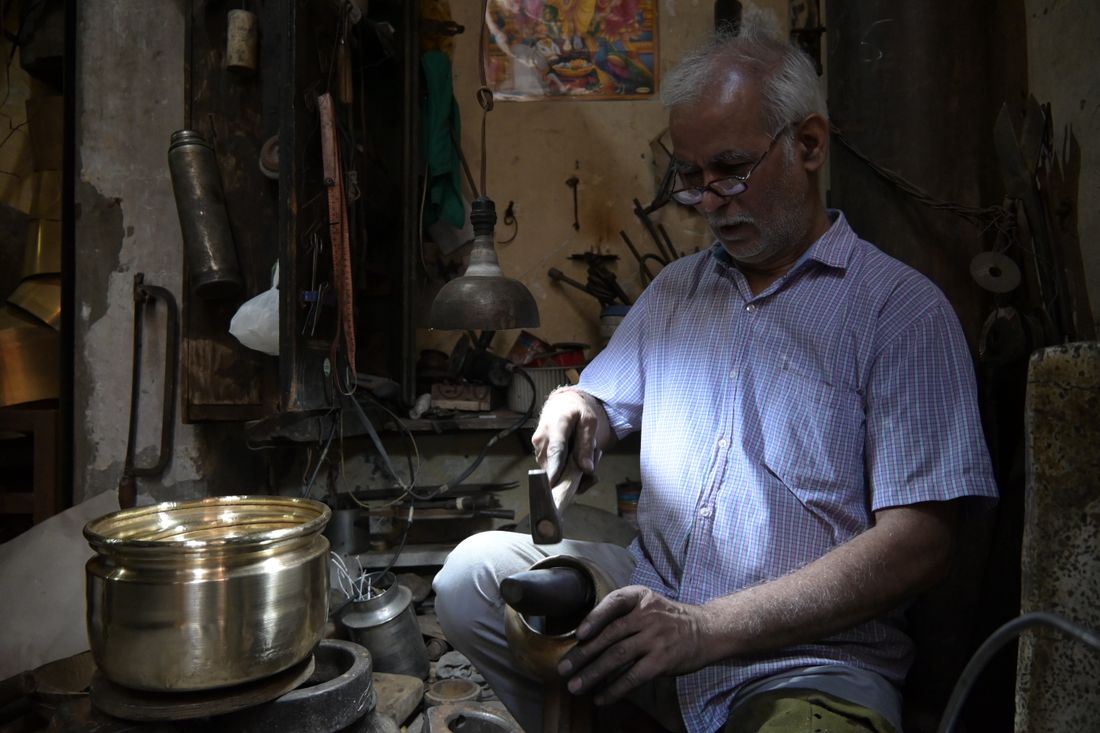
Bidri inlay from Bidar and Dhokra lost-wax casting — two of the most distinctive metal traditions in the world, and two of the slowest to produce at any volume.
What we buy in this line
- BidriwareZinc-alloy body with pure silver inlay, blackened in Bidar soil.
- Bidri tableware and objectsBoxes, vases, bowls, coasters and desk objects.
- Dhokra figuresLost-wax cast brass figures in the coiled-thread Dhokra idiom.
- Dhokra homewareBowls, lamps, planters and wall pieces cast by the same method.
- Mixed-mediaMetal craft mounted to wood, stone or leather bases.
- Commissioned workOne-off and limited-edition pieces to a supplied design.
What we fix before casting or inlay
Hand-made goods are bought against an approved sample, not a drawing. That only works if what the sample is being judged on is written down before anyone starts.
Every criterion above appears in the inspection report as a pass or a fail, with the measurement beside it. Where a criterion is a judgement rather than a number, the judgement is recorded against a retained physical sample.
What we screen before a sample is quoted
Silver substitution
Aluminium and nickel wire inlaid in place of silver is common and is very hard to see once blackened. Verified analytically where the price assumes silver.
Machine-cast Dhokra
Sand-cast or die-cast copies finished to look hand-worked. The give-away is on the interior surface, which is where we look.
Foundry conditions
Small lost-wax foundries run with minimal extraction or protection. This is an audit finding and should be treated as one.
Capacity
Both crafts are made by small artisan communities. Volume commitments beyond real capacity end in substitution.
Clusters we work for this line
Bidriware is GI-protected to Bidar. Dhokra is practised by distinct communities across Chhattisgarh, West Bengal and Odisha, each with a recognisably different hand.
The other hand-made skills
Send us the sample. We will tell you honestly.
Whether we can source it well in India, what it should cost, and what could go wrong — before you commit to anything.