Foundry, Casting
& Forging
Grey and ductile iron, steel, aluminium and brass — cast or forged, then machined. The line where a supplier’s real process capability is furthest from what the brochure claims.
Processes we buy
- Sand castingGreen sand and no-bake, in grey iron, ductile iron and steel.
- Gravity die castingAluminium and brass in permanent moulds for better surface and repeatability.
- Pressure die castingHigh-pressure aluminium and zinc for thin walls and volume.
- Investment castingLost wax for complex geometry and near-net shape in steel and alloys.
- Closed-die forgingSteel and aluminium forgings, with the die set specified and owned.
- Machined castingsDownstream turning, milling and finishing from the same supplier.
What we fix before the first pour
These goods are bought to a drawing, a grade and a tolerance. That only works if the drawing is controlled, the features that actually matter are named, and the supplier can measure them repeatably.
Every criterion above appears in the inspection report as a pass or a fail, with the measured value beside it and the gauge named. A first article is signed off before any bulk is produced.
What we screen before a sample is quoted
Chemistry drift between heats
A first article passes and the third heat does not. We ask for per-heat certification and spot-verify it independently rather than filing it unread.
Undeclared subcontracting
Melting, machining and heat treatment are routinely split across units the buyer never sees. Every location is disclosed as a condition of engagement.
Pattern and tooling ownership
Tooling you funded, held by a supplier who will not release it, is the most common way a buyer gets locked in. Ownership is settled in writing before payment.
Foundry safety
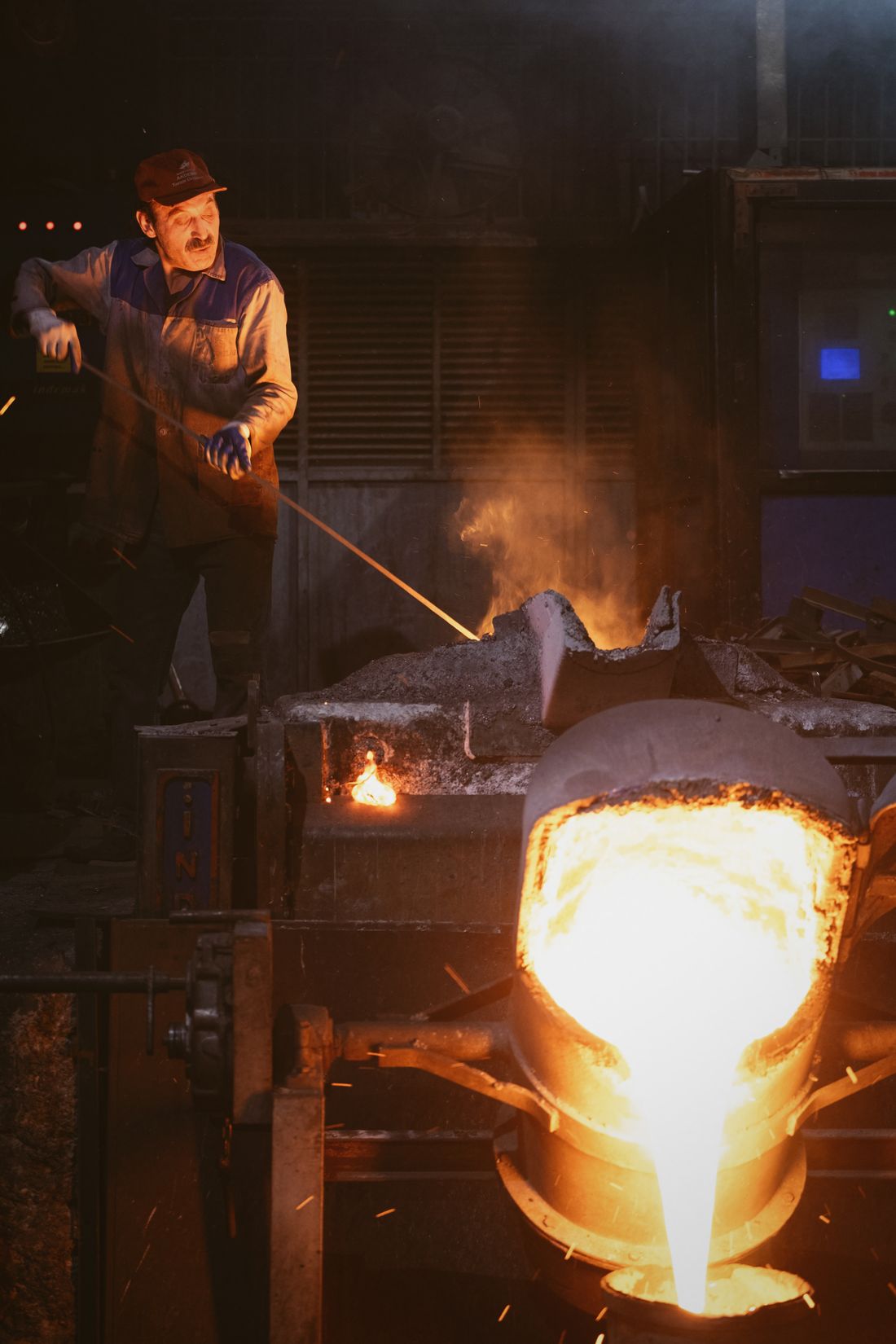
Molten metal handled with minimal protection is common in smaller units and is an audit finding, not a footnote.
Clusters we work for this line
Foundry capability in India is cluster-bound and alloy-specific. A shop that pours grey iron well is not automatically a shop that pours ductile, and neither is a forging house.
The other manufacturing lines
Send us the sample. We will tell you honestly.
Whether we can source it well in India, what it should cost, and what could go wrong — before you commit to anything.