Knitwear
& T-Shirts
Single jersey, pique and fleece, from knitting through to a finished, printed and packed garment — where GSM, shrinkage and colour fastness decide whether a repeat order happens.
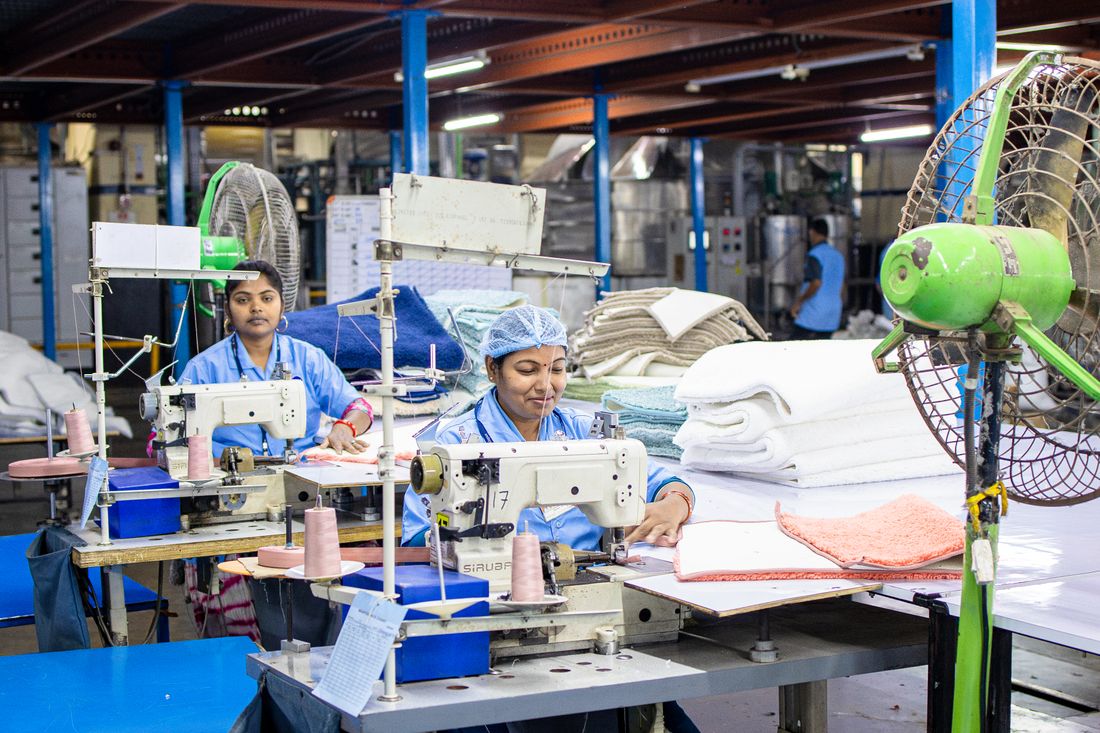
What we buy in this line
- T-shirts and polosSingle jersey and pique, in cotton, blends and performance yarn.
- Fleece and sweatshirtsBrushed and unbrushed fleece, crew and hooded.
- KnittingCircular knitting to your GSM and construction.
- Dyeing and finishingReactive, garment-dyed and pigment, with the wash route specified.
- Print and embroideryScreen, transfer, discharge and embroidery, tested for fastness.
- PackingFolded, poly-bagged, labelled and cartoned to your retail specification.
What we fix before bulk
These goods are bought to a drawing, a grade and a tolerance. That only works if the drawing is controlled, the features that actually matter are named, and the supplier can measure them repeatably.
Every criterion above appears in the inspection report as a pass or a fail, with the measured value beside it and the gauge named. A first article is signed off before any bulk is produced.
What we screen before a sample is quoted
Cotton origin and forced labour
US import rules make cotton traceability a customs risk. Origin documentation is requested at the outset, not after a shipment is detained.
Fabric substitution
A lighter GSM that feels similar and costs less. Verified on the delivered fabric, because it is the single most common way this category degrades.
Shrinkage after shipping
Garments that meet spec at the factory and move in a container. Tested after the specified wash on production fabric.
Subcontracted stitching
Overflow sent to unaudited units at peak. Disclosure of every stitching location is a condition of engagement.
Clusters we work for this line
Tiruppur is the knitwear capital and handles most Indian t-shirt export. Ludhiana is stronger on winter knits. Capability inside Tiruppur ranges from world-class to informal.
The other manufacturing lines
Send us the sample. We will tell you honestly.
Whether we can source it well in India, what it should cost, and what could go wrong — before you commit to anything.