Kalamkari &
Hand-Printed Textiles
Pen Kalamkari, block Kalamkari and hand block printing — where "handmade" covers three completely different processes at three completely different prices.
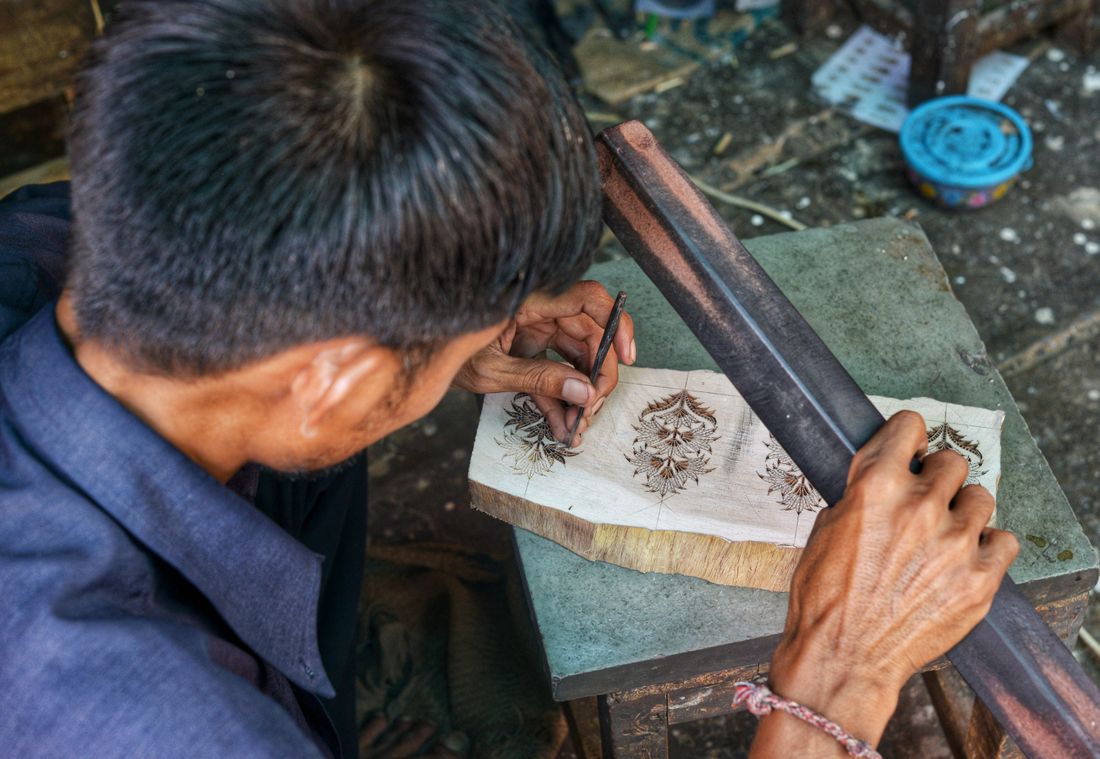
What we buy in this line
- Pen KalamkariFreehand drawn with a bamboo pen — the slow, high-value form.
- Block KalamkariCarved-block printed and hand-finished, at production volumes.
- Hand block printingCarved teak blocks on cotton, silk and linen.
- Natural dyeingMadder, indigo, iron and myrobalan, with the mordant chain documented.
- Furnishing yardagePrinted to the metre for drapery, upholstery and bedding.
- Made-upsCushions, quilts, table linen and wall panels.
What we fix before the first print
Hand-made goods are bought against an approved sample, not a drawing. That only works if what the sample is being judged on is written down before anyone starts.
Every criterion above appears in the inspection report as a pass or a fail, with the measurement beside it. Where a criterion is a judgement rather than a number, the judgement is recorded against a retained physical sample.
What we screen before a sample is quoted
Screen print sold as block print
Visible in the edge quality of the print, and routinely missed by buyers working from photographs.
Natural dye claims
"Natural dye" is asserted far more often than it is true. Where the buyer is paying for it, it is verified.
AZO and restricted substances
Tested against the buyer’s restricted-substances list; these clusters supply markets with looser rules than the US.
Dye effluent
Small-unit dyeing discharges into local water. It is an audit finding whether or not the buyer asks about it.
Clusters we work for this line
Srikalahasti is the pen Kalamkari tradition; Machilipatnam is the block tradition. They are not substitutes for one another.
The other hand-made skills
Send us the sample. We will tell you honestly.
Whether we can source it well in India, what it should cost, and what could go wrong — before you commit to anything.